Evolution of Football Tactics: How the Game Has Transformed Over Time
Football has never stood still
It may look simple — twenty-two players, one ball, ninety minutes — but beneath that simplicity sits a constantly evolving chessboard of ideas, philosophies, and tactical revolutions that shaped how the sport is played today.
From muddy pitches and rigid formations to positional play, pressing traps, hybrid midfielders, and goalkeepers who build attacks — the sport has transformed more in the last 30 years than in the previous 100.
Football didn’t simply grow.
It intellectualised.
Great managers became architects. Analysts replaced instinct with data. And style became as important as results — because in the modern game, controlling the game means understanding it better than your opponent.
Let’s step into that tactical evolution — from disciplined soldiers of early football to fluid systems of the modern era.
When Football Was Fight Before Thought
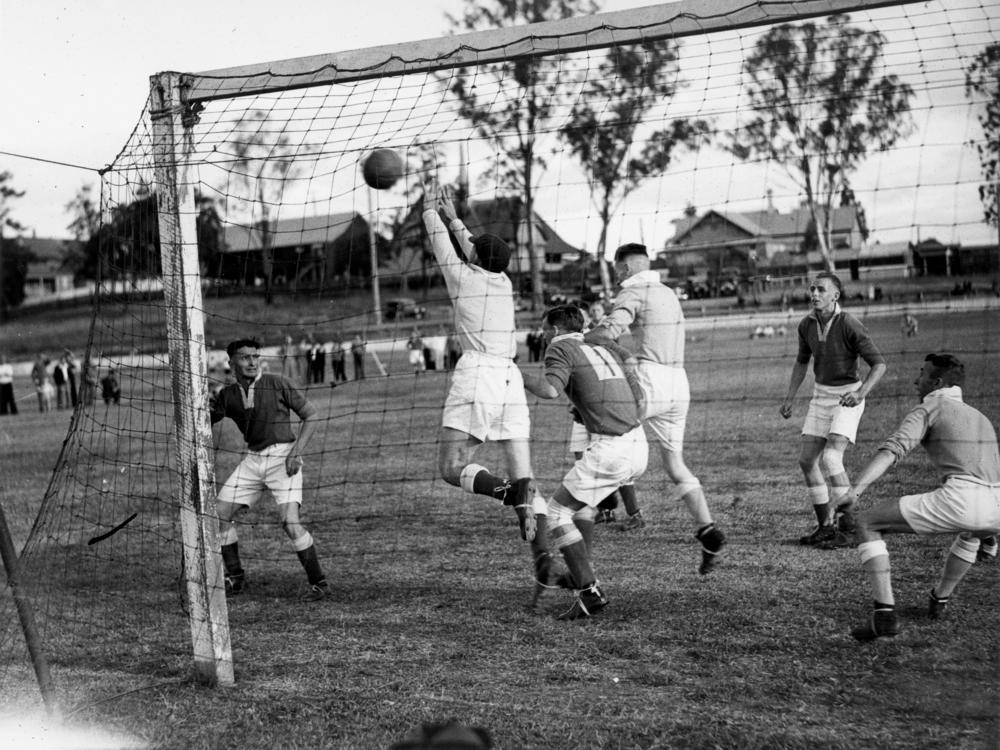
In the late 19th and early 20th century, football wasn’t yet “tactical.” It was industrial, physical, direct. A sport of collisions and determination more than coordinated strategy.
Formations like the 2-3-5 “Pyramid” dominated: defenders defended, attackers attacked, and transitions were chaotic bursts of vertical football. Matches were often about bravery, stamina, and simplicity.
Winning duels meant winning matches.
The ball was kicked forward. The fastest and toughest survived.
It wasn’t beautiful, but it laid the foundation of positional responsibility — the beginning of structure.
Catenaccio: When Defence Became an Art
Mid-20th century football introduced calculation and discipline. No one understood space better than Italy.
Catenaccio, built around a sweeper (libero) behind the defence, transformed the sport. It wasn’t anti-football — it was strategy. It recognised that sometimes control comes from restricting the opponent, not dominating the ball.
Clubs like Inter Milan built dynasties on organisation, compact lines, and devastating counters. It inspired decades of football where structure, shape, and patience became weapons.
Not everyone loved it. But without defence-first evolution, there would be no balance — and balance is the heartbeat of modern tactics.
Total Football: When Movement Became Freedom
Then came the revolution.
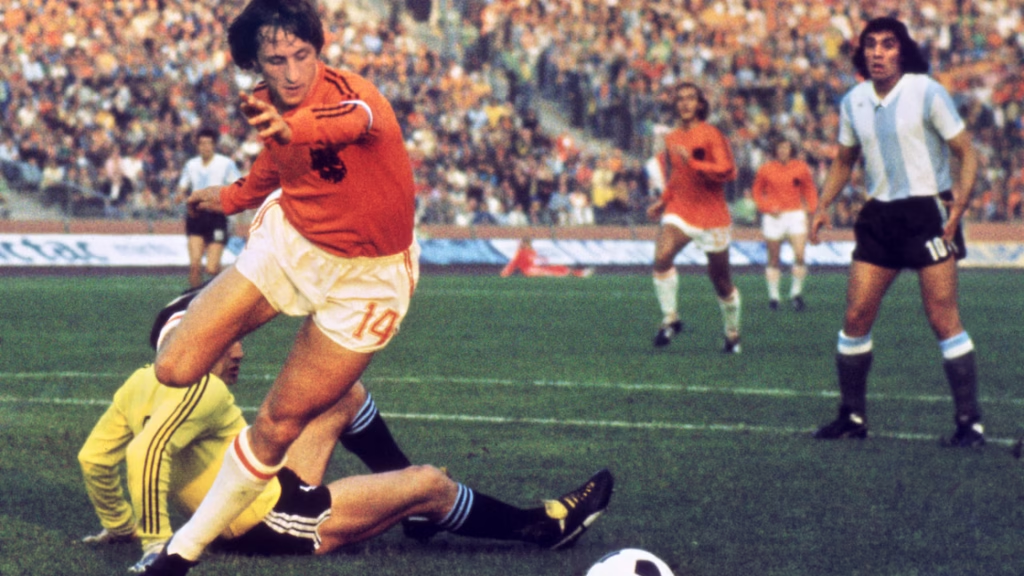
1970s Netherlands — led by Rinus Michels and Johan Cruyff — turned football into art and mind-science
Players could switch positions. The ball moved with intelligence. Pressing became coordinated, not chaotic. Space became a battleground, not an accident
“Total Football” didn’t just change tactics — it changed thinking:
Roles became fluid
“Systems” mattered more than star individuals
The ball did the running, not only the players
Intelligence became as valuable as power
It wasn’t merely a style. It was philosophy
Modern football was born here.
The Rise of the Back Four, Midfield Wars & Pressing
While Total Football changed the game’s soul, the late 20th century sharpened it through structure and athleticism.
The 4-4-2 era wasn’t primitive — it was efficient.
Two banks of four, hard-running wingers, two forwards working in tandem. It dominated English football, European finals, and international tournaments.
Managers like Sir Alex Ferguson perfected the shape with:
Wide overloads
Strong wing play
Direct yet intelligent movement
Relentless intensity
Meanwhile, Arrigo Sacchi’s AC Milan pressed as a unit — compact, aggressive, synchronised. He believed:
“Team spirit means all eleven players move as one.”
That idea — pressing as organisation, not effort — became the tactical backbone of modern football.
The Guardiola Era: Positional Play & Domination
If Total Football was the revolution, Pep Guardiola refined it into science.
Barcelona 2008-2012 changed global football:
Positional play (Juego de Posición)
Ball circulation to manipulate space
Midfielders everywhere
Pressing immediately after losing possession (five-second rule)
Full-backs in midfield lanes
Keeper as first playmaker
It wasn’t just possession — it was possession with purpose:
Break lines, move opponents, create superiority in zones, control chaos before it exists.
Guardiola didn’t invent these ideas — but he perfected them, and the football world followed.
Klopp & The Age of Verticality
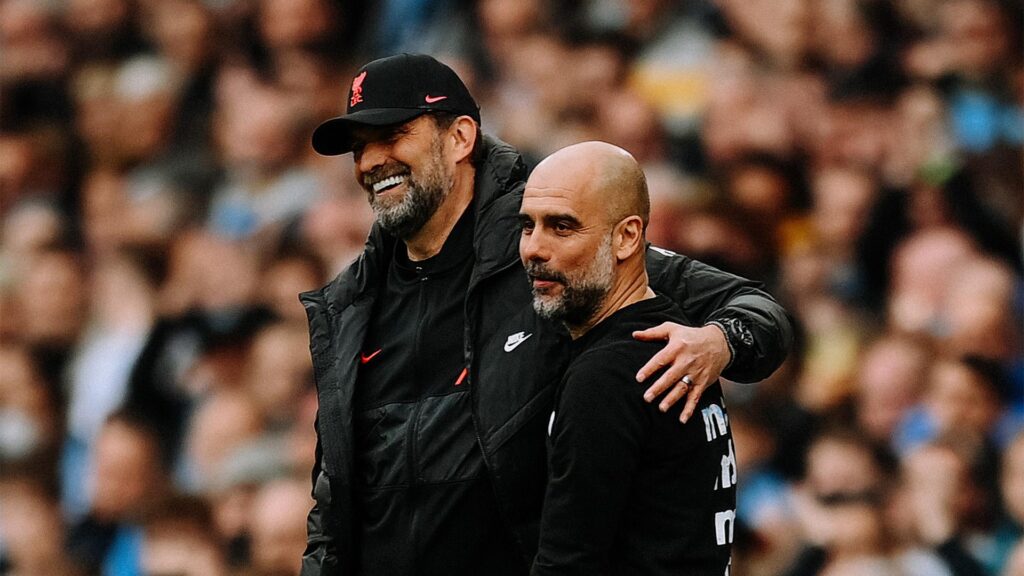
While Guardiola shaped control, Jurgen Klopp championed energy, emotion, and rapid transitions.
Gegenpressing — “counter-pressing” — turned losing the ball into an attacking opportunity. Liverpool and Dortmund suffocated opponents with:
Explosive vertical runs
Immediate pressure after turnovers
Wide overloads and half-space attacks
Direct, high-speed patterns
It wasn’t anti-Guardiola — it was the opposite side of the same coin:
Control through chaos instead of control through structure.
Modern football lives in the tension between these two geniuses.
Hybrid Era: Where Every Player Becomes Everything
Today’s football doesn’t fit clean eras — it’s fusion.
Full-backs invert into midfield
Wingers become creators, not crossers
Defensive midfielders start attacks, not stop them
Centre-backs play 30-meter line-breaking passes
Goalkeepers operate as defenders and playmakers
Systems aren’t fixed — they’re situational layers.
A team might defend in 4-4-2, build in 3-2-5, and attack in 2-3-5 — all within seconds.
Footballers aren’t positions anymore — they are profiles, roles, and functions.
Intelligence now matters as much as technique.
The Future: Fluidity, Intelligence & Individual Creativity Reborn
What comes next? Two forces will shape the next era:
1. Tactical universality
Players who can press, create, defend, overload, invert, run and think.
Footballers built like chess queens — useful everywhere.
2. Creativity revival
The next tactical wave will set free the gifted disruptors —
not old-school dribbling for show, but unpredictable match-breakers in structured systems.
Think Bernardo Silva meets Iniesta meets Kvaratskhelia
The future tactician isn’t choosing structure vs inspiration —
he’s merging them.
Conclusion
The evolution of football tactics isn’t linear — it’s a living organism shaped by culture, genius, rules, and imagination.
From rigid lines ➠ to fluid chaos-control.
From long balls ➠ to positional mastery.
From defenders who only tackled ➠ to defenders who dictate rhythm.
From goalkeepers guarding the net ➠ to goalkeepers launching attacks.
Football’s beauty isn’t only in goals — it’s in ideas.
And as long as people dream about the game, the game will evolve.
The great managers don’t copy eras.
They create new ones.
And somewhere right now, a young coach is watching, learning, imagining…
ready to design the next revolution.